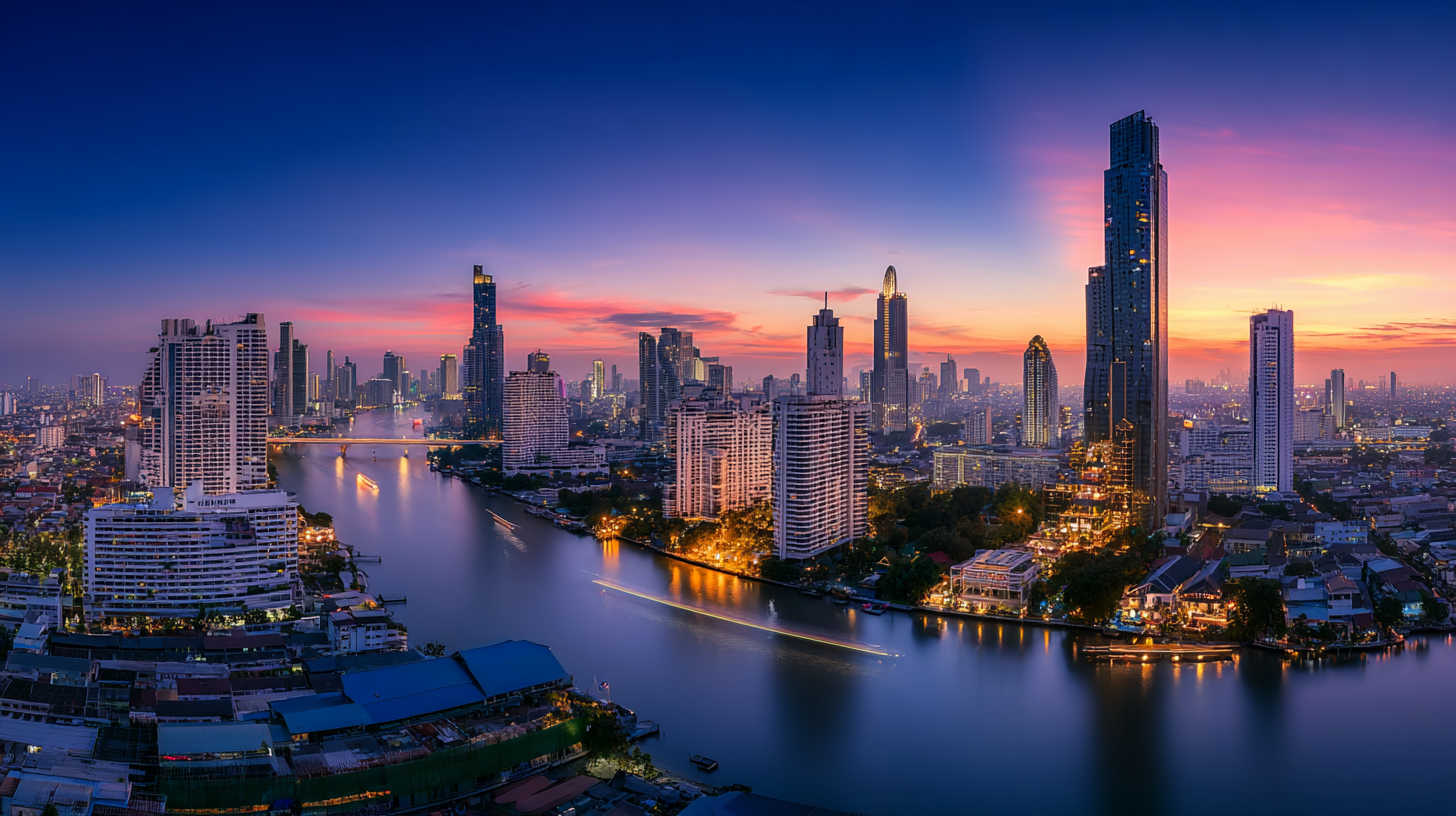
Thailand
2026
Ambition to action: Accelerating Thailand’s transition

September 23, 2026

One Bangkok Forum, Bangkok


Thailand is increasingly leveraging finance and technology to adapt to mounting climate risks while countering global politics, trade and economic volatility. This ranges from channelling long-term finance into urban adaptation and disaster risk preparedness, to re-strategising the transition to address energy, water and food security while unlocking shared value through innovation. This is key with Thailand facing its weakest economic growth in decades. Finally, building the right governance frameworks around emerging technologies, including artificial intelligence, to underpin sustainable development will be key to unlocking stronger climate and economic resilience.
The 2026 edition of Unlocking capital for sustainability – Thailand forum will convene policymakers, investors and industry leaders to explore how the country can leverage innovation, finance and cross-sector collaboration to strengthen economic resilience through sustainable development, while managing these emerging risks.
What we're talking about
Key Speakers
Speakers

.png)






Agenda
12:00
Registration
Speakers
Moderators
13:00
13:10
Opening keynote by guest-of-honour
Moderators
13:20
13:30
Opening plenary – Re-strategising water governance for resilient economies
Water security is emerging as one of Asean’s most pressing yet overlooked business risks, with the sustainable management and availability of freshwater resources critical to business continuity, industrial competitiveness and long-term economic resilience. For Thailand, which face recurring droughts and floods in the face of growing industrial demand and climate disparities, strengthening governance on water use – from policy and finance to business strategy – will be key to navigating this issue.
This session will convene leading decisionmakers in policy, finance and industry to chart tangible strategies to enhance water security, addressing questions such as: How is water shaping business and regulatory strategies for resource-intensive sectors such as agriculture, electronics and data in the long-term? Can improved operational resilience and water efficiency spur greater investment flows into Thailand? And why is addressing the interconnected resource challenges of water and energy use now an indispensable business imperative?
Speakers
14:30
Plenary 2 – Strengthening the link between AI, energy and urban resilience
Bangkok, alongside other cities across Thailand and the region, have long been grappling with climate risks, threatening everything from physical infrastructure to urban resilience and causing untold economic losses. Linking the energy transition to urban and economic resiliency will be key to addressing these mounting risks. The challenge, however, lies in designing fit-for-purpose transitions to meet urgent urban adaptation needs while leveraging artificial intelligence (AI) so its bolsters rather than hinders long-term resilience.
This session will convene leaders working in the intersection between urban resilience and the transition, covering questions such as: What mechanisms are needed to attract private and multilateral capital at scale against a backdrop of weakening economic growth? How do we align clean energy and AI tech adoption with adaptation needs? And what role will Thailand’s Climate Change Act, and other regulatory frameworks, play in creating the legislative ecosystem needed to support long-term financial flows in this space?
15:30
Closing keynote address
15:45
Closing remarks
Speakers
Moderators
16:00
Networking
Speakers
Moderators
Partners
In partnership with

Strategic partner

Visit website
UOB
United Overseas Bank Limited (UOB) is a leading bank in Asia with a global network of about 500 branches and offices in 19 countries and territories in Asia Pacific, Europe and North America. We believe in being a responsible financial services provider and we are committed to making a difference in the communities in which we operate.
Find out more
Venue partner

Knowledge partner


.png)
.png)
.png)
