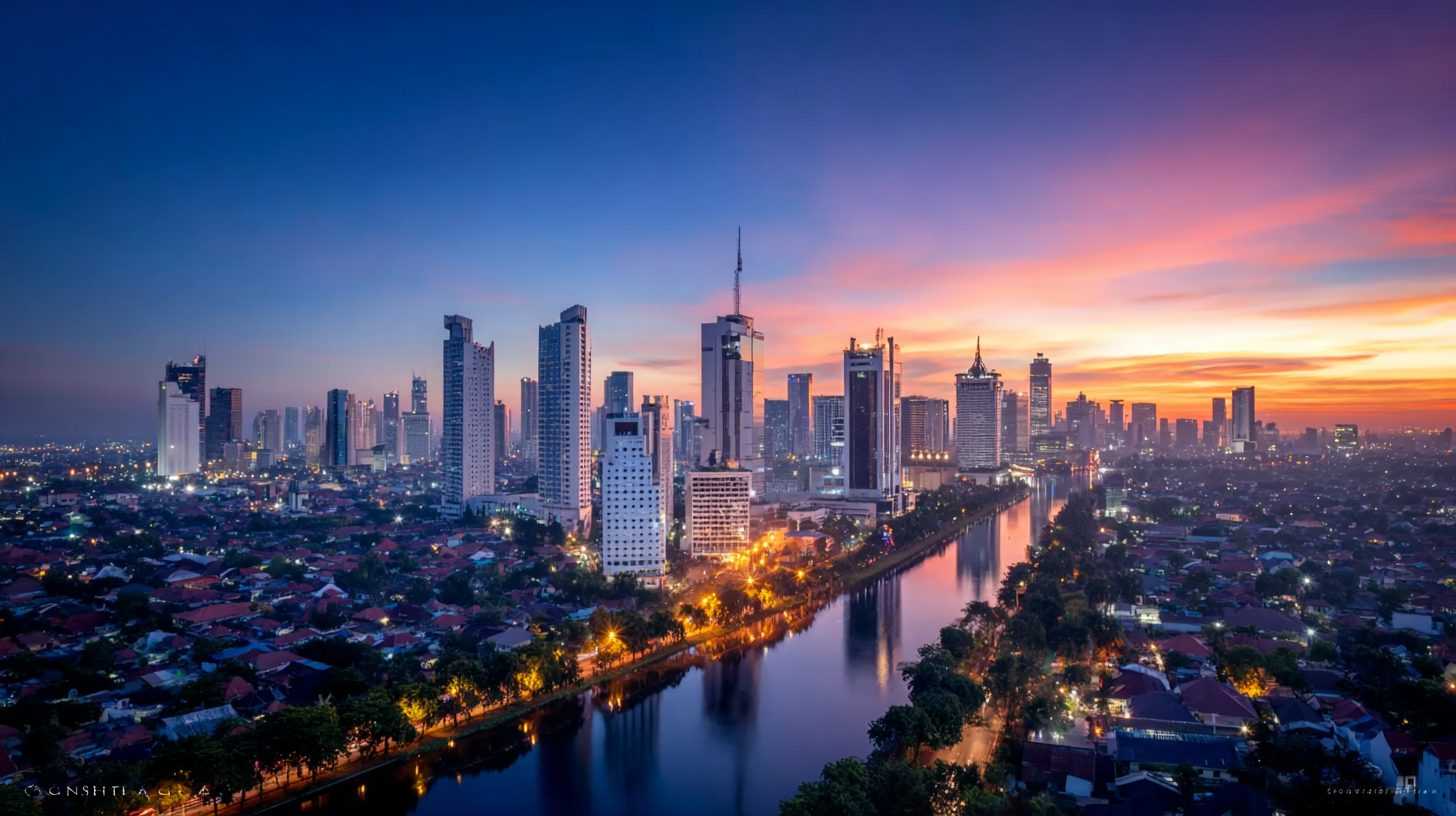
Indonesia
2026
Strengthening governance, securing resilience

June 24, 2026

Global Sustainable Development Congress (GSDC) 2026, Indonesia Convention Exhibition, Jakarta, Indonesia


Synopsis
Indonesia is at a critical juncture. Faced with pressing governance gaps, deforestation and resource constraints, coupled with the need to attract investments amid a turbulent geopolitical environment, how the country navigates these issues will determine both its domestic resiliency and regional leadership. Recent rupiah volatility and questions over central bank independence also demonstrate how quickly investor confidence can falter when policy signals blur. Against this backdrop, creating robust, long-term governance structures and clearer policy direction can strengthen the commercial viability and bankability of vital adaptation and decarbonisation projects.
Indonesia’s aspirations to establish itself as a regional carbon market hub also stand to unlock new financial flows to protect the country’s at‑risk biodiversity. Meanwhile, with climate technology fuelling high demand for critical minerals like nickel, Indonesia will have to manage their pervasive ESG risks – from environmental violations to pollution.
The 2026 edition of Unlocking capital for sustainability – Indonesia will bring together policymakers, investors and industry leaders to explore how credible governance reforms can reduce risk, mobilise investment and secure resilient growth while aligning with the country’s long-term economic aspirations.
This year, Unlocking capital for sustainability – Indonesia will be held as part of the fifth annual Global Sustainable Development Congress (GSDC) 2026, which brings together research, business, government and higher education to accelerate sustainable transformation.
Access and registration
Access to Unlocking capital for sustainability – Indonesia is via the GSDC Premier Pass, available at an exclusive 50% discount for the Eco-Business community using promo code ECOBUSINESS-50. The GSDC Premier Pass provides access to the summit as well as to the wider congress programme, featuring high-level events such as the Asia-Pacific Sustainable Business Summit, interactive workshops, research and policy discussions, and networking opportunities across four days. Register directly via the GSDC website to secure your discounted pass.
Key Speakers
Speakers








Agenda
12:00
Registration
Speakers
Moderators
13:00
13:10
13:25
Special address
13:40
Opening plenary – Can carbon markets be a lifeline for Indonesia’s threatened biodiversity?
In the face of rampant nature loss, Indonesia’s carbon market ambitions could prove vital to plugging critical funding gaps facing the country’s conservation efforts. From aligning to international frameworks through legislative reform to strengthening forest carbon governance, Indonesia is making concrete strides to establish itself as a leading regional carbon player.
This session will answer burning questions such as: Can a national carbon market provide the regulatory certainty to spur investments and scale solutions? What safeguards are needed to ensure market scale does not come at the expense of environmental integrity and social welfare? And will the credibility of the country’s carbon trade affect its ability to leverage global nature finance?
Speakers
14:30
UCFS: Insights
Speakers
Moderators
14:45
Networking break
Speakers
Moderators
15:00
Critical lens – Navigating AI, ESG risks as a global critical minerals player
The success of artificial intelligence (AI) and climate tech adoption will hinge on a steady supply of high-demand critical minerals such as nickel and copper. Though strategically positioned to benefit as a global critical minerals leader, Indonesia’s reliance on captive coal to power production is putting its climate goals and economic future at risk. The challenge lies in funding clean energy projects while coping with surging energy costs, supply shocks and growing ESG risks – from pollution to social harm – facing the mining industry. Meanwhile, the industry is contending with a global critical minerals race which is reshaping the nature of geopolitics.
This session will address urgent questions such as: Will the ongoing energy crisis hinder or hasten Indonesia’s energy transition? Can strategies to curb the industry’s rising ESG risks keep pace with surging demand? And how will the G7-allied economies’ plan to diversify away from China’s stronghold on critical mineral supply impact Indonesia?
15:50
Closing keynote address
Moderators
16:00
Closing remarks
Speakers
Moderators
Partners
In partnership with

Strategic partner

Visit website
Global Sustainable Development Congress
Launched in 2022, the Global Sustainable Development Congress brings together leaders from global higher education, business, government, and civil society to accelerate sustainable transformation. From high-level summits to interactive workshops, the congress connects industry, policy and universities to translate ambition into action and advance sustainable development worldwide.
Find out more
Knowledge partners

Visit website
Climate Policy Initiative (CPI)
Climate Policy Initiative (CPI) is an analysis and advisory organization with deep expertise in finance and policy. Our mission is to help governments, businesses, and financial institutions drive economic growth while addressing climate change. CPI has six offices around the world in Brazil, India, Indonesia, Kenya, the United Kingdom, and the United States.
Find out more

Outreach partner


Visit website
Koalisi Ekonomi Membumi
KEM is a strategic coalition of 29 organizations committed to driving a responsible bioeconomy in Indonesia. As a catalyst for collaboration, a bridge across value chains, a hub for knowledge, a builder of narratives, and a driver of policy innovation, KEM convenes and accelerates collective action to position the bioeconomy as a sustainable and impactful economic alternative for the nation.
Find out more

Visit website
Greeneration Foundation
Greeneration Foundation (GF) is a non-governmental organization focusing on waste management issues by utilizing creative media in improving people’s behavior to implement Sustainable Consumption and Production (SCP) in Indonesia. We are based in Bandung with a representative team in Jakarta, Indonesia. We collaborate with government, environmental organization, and grassroot community.
Find out more


.png)
.png)
.png)
